– Tshering Lama [break]
People in his beautiful mountainous village, Helambu, would lose their lives after minor injuries. Lack of timely healthcare services was the reason. Personal stories fill his mind, of carrying his sister for hours to reach a healthcare center – which left him exhausted and his feet blistered – of returning to his village with the gift of life – a mere Rs. 100 of medicine. Such difficulties remain etched in Tshering Lama’s mind from his youth.
“Coming to the city with all those troubles and returning home with a few medicines in my pocket,” He observes, “[I thought,] wasn’t there a way out?”
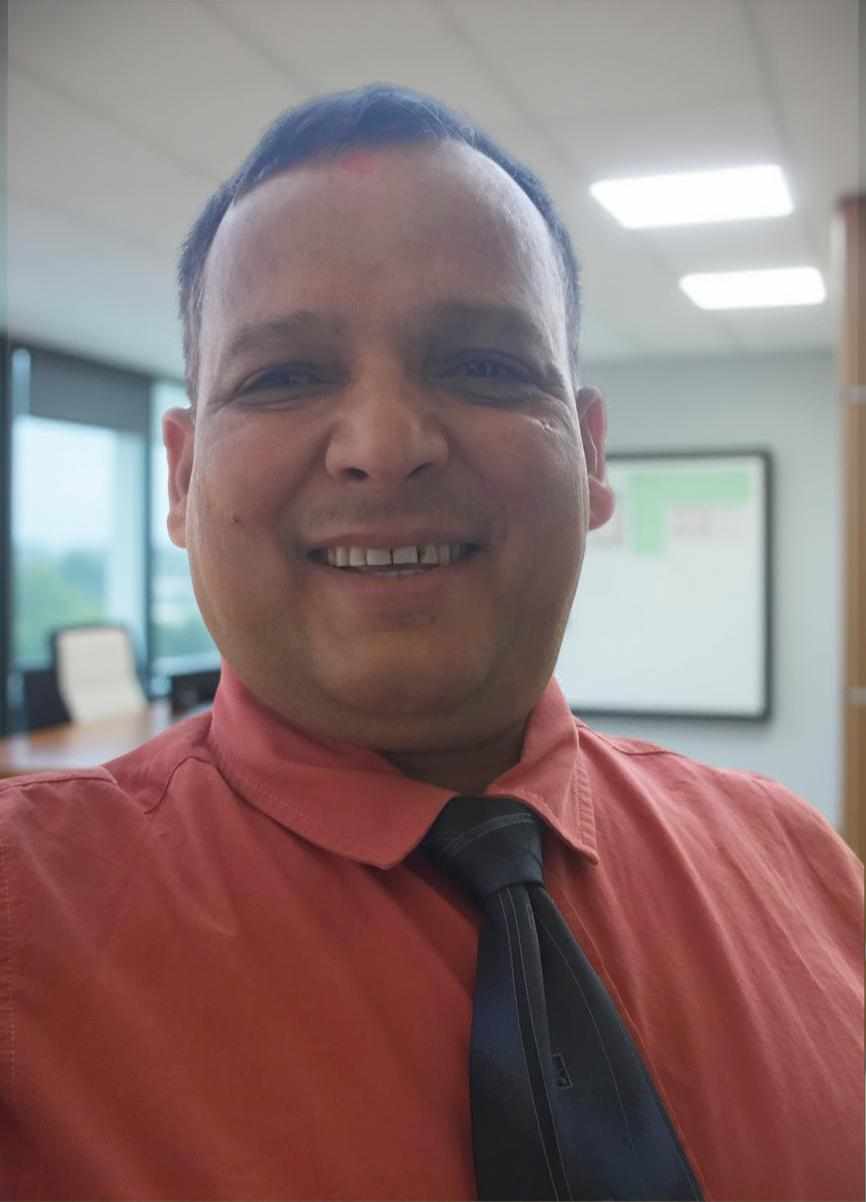
Now a PhD student at Northumbria University, UK, Tshering is currently in Nepal doing telemedicine research. Together with Dhulikhel Hospital, he is in the process of making telemedicine more effective and fast.

Nine years back, curiosity brought him to Kathmandu to pursue his A-Level studies.
“I heard foreigners who visited my village talk about A levels,” recollects Tshering. And the rest, as they say, is history.
Tshering is still that young curious guy trying to achieve what no other boy in his village had even dreamt of: to become educated so that he could give back to others.
How much has happened? Two years ago, he met former UK Prime Minister Tony Blair after being named regional winner of the British Council’s Shine Award for international students. Besides several international recognitions, a Northumbria University scholarship has been named after this Nepali lad.
Yet his rising prominence has not gone to his head. He still is a boy from Helambu with a heartwarming smile that could melt the mountains. And he is using his global recognition to help Nepal improve its always challenged health services.
“Almost 90% of the healthcare services are based in the Valley,” says Tshering, “but the irony is about 89% of people live outside it.”
Added to this are several other factors which make treatment of a patient a particularly onerous undertaking in remote parts of Nepal. These include such hidden costs as transportation, lodging, and feeding a caretaker, all of which discourage villagers from even visiting hospitals. Add to this the inevitable and endless bandas, chakka jams, and obstructions, such as from landslides, which is why healthcare for villagers is an endlessly escalating crisis.
Analyzing the conditions, Tshering concludes, “Telemedicine with the help of information, communication and technology (ICT) is the medium to bridge the gap.”
In Tshering’s words, telemedicine is a method practiced over distance, carried out with consultation, diagnosis, and follow-ups, thus providing a way to conquer time and space.
Impressed by how technology was getting cheaper and simultaneously advancing in Nepal, Tshering chose to conduct research here, in his home country. All twelve healthcare outlets of Dulikhel Hospital, where he is conducting the research, are connected with telephone service. The next phase is connecting them on Internet.
Nevertheless, at the same time, there were and still are challenges, such as regular power cutoffs and lack of a well developed nationwide communications infrastructure. These frustrate Tshering at times.
“When there were 16 hours of regular power cutoffs, I thought about returning to the UK. Then I thought: I have option to run away, but do the patients and villagers have it?” he laughs.
“It’s not the technology or something else but humanity that drives me to work,” adds Tshering. And that can be felt in his words and eyes.
Being born in a village, Tshering feels that he has been able to understand the challenges and obstacles involved while working there.
“Along with the technological aspects involved in telemedicine, factors like building trust between health workers (HW) and doctors, teaching HW to use basic computer skills, the language barriers – all have to be worked out,” adds this man on a mission.
To bridge the gap, Tshering, along with Dulikhel Hospital, conducts workshops that bring together doctors, health workers, nurses, and midwives. They are guided on how to function as a team that will better the services provided to the patients with on-the-spot personnel accessing information quickly and consistently.
Thus, beyond the workshops, doctors visit the healthcare centers once a week to check up on patients and to boost up the confidence level of HWs.
The results can be felt in the villages. Already, there have been cases where patients in urgent need of operations and healthcare have survived by the intervention of telemedicine.
Along with examples of treating several skin diseases, there are a growing number of incidents when telemedicine, by providing timely and accurate information, has been able to save lives of people.
“A woman stung by wasps and hornets in Sindhupalchowk was brought down to a healthcare center after several attempts of home cure didn’t help her,” cites Tshering for illustration. There was a high chance of kidney failure. After HWs consulted the doctor in Dulikhel through telephone, both of them worked on the treatment process whereby the patient was out of the danger.”
Telemedicine is only a tool, a step to a comprehensive health system. Nevertheless, it is an important addition and is the sort of service that is common in many parts of the world.
To contribute to the comprehensive system, this year, even while conducting his research, Tshering reopened the very school from where he passed his School Leaving Certificate (SLC). It had been a victim of the decade-long conflict in Nepal.
Now, all the 75 students studying in his school have insurance. And one day, he plans to include A level studies in the school.
Related story
IN PICS: Beautiful landscapes of Helambu, the hidden Hyolmo Val...