The conference saw heads of states, government officials and other representatives from all United Nation (UN) member countries attending the conclave. The event was also held to also accelerate the progress towards achieving sustainable development internationally.[break]
AYON (Association of Youth Organizations) and Y-Peer (Youth Peer Education Network), both youth led organizations based in Kathmandu working for the youth to provide a common platform for collaboration, cooperation, joint actions and collective endeavors, collectively presented a position paper about sustainable development in Nepal and what should be done at the Rio+20 Summit.
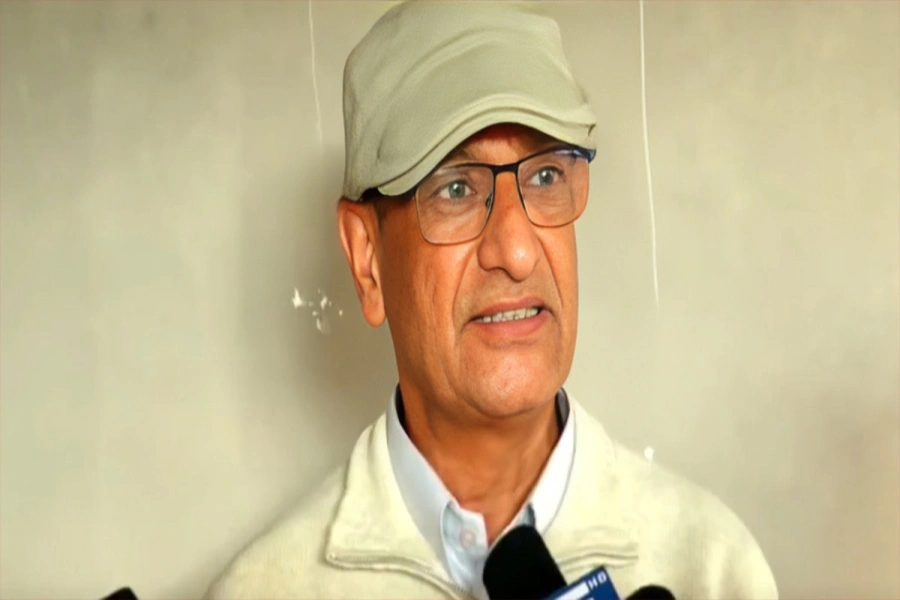
Republica caught up with Pradip Pariyar, President of AYON and a youth fellow in World Bank (WB) and International Monetary Fund (IMF), to talk about the recommendations put up in the paper and how the youth of today are taking and talking about sustainable development. He is also of the thought that without the youth being empowered, there will be less development, or more so sustainable development.

The position paper was presented by Bijay Raj Paudel during the conference and was prepared after holding discussions with youths in Nepal and focused on the following issues.
Sexual and reproductive health and rights
The position paper stated that in 1996, a Maternal Mortality Rate of 539 maternal deaths per 1, 00,000 live births were reported. The number was reduced to 281 by 2006, representing a decline of 48 percent over a period of 10 years.
Ministry of Health and Population has targeted that 1000 existing governmental health centers would be made adolescent and youth friendly by 2015.
“Sexual and reproductive health and rights is an important issue, for the youth especially, because they need to know about sex and reproduction and their rights,” shares Pariyar.
The paper called on full and effective implementation of the Millennium Development Goals (MDGs) to ensure young people’s rights to education, employment and health, emphasizing sexual and reproductive health; to support gender-sensitive, age-appropriate, life-skills-based comprehensive sexuality education for the young among other things.
Employment and migration
“Most of the young people in Nepal think that there is no hope in this country which is not correct. They are leaving the country looking for better opportunities abroad and it is with their remittance that the state is running,” says Pariyar, adding, “Wherever in the world, if the youth population is high and strong, the pace of development will be high and it’s a proven fact.”
The paper calls on the government to urgently address the growing rate of unemployment among the young through employment creation, implement programs to support and strengthen equal employment opportunities and equitable remuneration for women in the formal and informal sectors.
The paper also talks about effective implementation of programs and policies on migration by protecting the rights of migrant workers and investing and supporting social, economic and cultural reintegration of migrants in their communities.
Youth participation
According to the paper, in recent years, Nepal has seen some progress in recognizing the need and importance of young people. Nepal government’s decision to establish the Ministry of Youth and Sports and the promulgation of National Youth Policy can be taken as a positive response.
The paper presented in Rio+20 urges the official to make sure that the youth get a meaningful participation in decision making in sustainable development including planning, policy making, budget allocation, implementation and evaluation of programs that have direct and indirect effect on young people’s lives, recognize the diversity among young people, and focus on meeting the human rights of discriminated, marginalized and disadvantaged young people, and effective implementation and regular monitoring of National Youth Policy and various other policies among other things.
Environment sustainability
“Climate change is a big issue in today’s context. The mercury is rising every year and hitting new highs, hence in the paper we call for a green economy that values human well-being, social equity, economic growth and environmental protection as equal basis as an integrated framework for sustainability,” says Pariyar, adding that the youth can and should take a stand on this.
Promotion and investment from all sectors in Micro-Hydro electricity for access to sustainable energy solutions, skill based training for the promotion of green economy, enhancing and prioritizing environmental conservation, ensure adequate access to energy for all by resolving the current energy crisis and adopting more greener and sustainable energy solutions, are also some of the issues that has been called on for.
Education
“A person who holds a Master’s degree in Nepal will have no idea of what kind of job s/he is going to land into and hence the unemployment rate is high,” informs Pariyar. He insists that the education system must change in Nepal and producer more manpower than just leaders, which is happening at the moment.
Decentralization of examination system and formative with Continuous Assessment System (CAS), proper motivation and rewards, along with amendment in the Education Act 2028 in time to address proper teacher management.
Gender equality
The gender equality act 2006 and Gender Based Violence act 2007 are some of the achievements in recent years in Nepal’s context. However, with continuous marginalization of women and gender issues, the paper calls on for acknowledgement of synergies and inter-relationships between gender equality and sustainable development, and ensure girls’ and women’s participation in decision-making in sustainable development processes and governance at all levels, and their role as “agents of change” and to ensure that women have the right to decide freely and responsibly the number and spacing of their children and have access to information, education and means, as appropriate, to enable them to exercise this.
Related story
Sustainable Tourism Challenges