

KATHMANDU, March 11: The general election has ended, and public attention has now shifted to the formation of the next government. Interest has grown after it became clear that the Rastriya Swatantra Party (RSP) is close to securing a two-thirds majority in the House of Representatives. People are closely monitoring the formation and direction of the new government. At the center of this attention stands the RSP, which is preparing to lead a powerful government backed by a strong mandate.
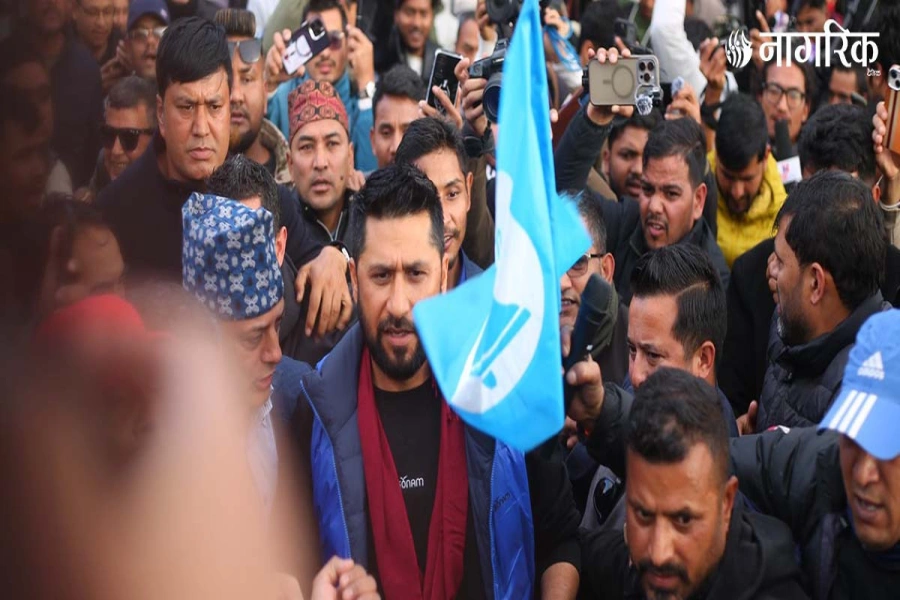
Although the party has not yet made a formal decision, many expect senior RSP leader Balen Shah to become prime minister. The country will get a new prime minister only after the party holds an official meeting and elects its parliamentary leader. The process of forming a government will start once the Election Commission submits the final election report to President Ram Chandra Paudel.
The commission plans to submit the report of the 2026 House of Representatives election in the first week of April. The report will include full details about the winners under both the direct election system and the proportional representation system. Results from the 165 constituencies under the direct system have already been announced.
Under the direct election system, the RSP has won 125 seats. The Nepali Congress has secured 18 seats, the CPN-UML 9 seats, the Communist Party of Nepal 8 seats, the Shram Sanskriti Party 3 seats, and the Rastriya Prajatantra Party 1 seat. One independent candidate, Mahabir Pun, has also won a seat.
With the direct vote count almost complete, the RSP is moving toward forming a strong government. Vote counting under the proportional representation system is still underway. After this process finishes, the Election Commission will submit the final report to the president.
761 complaints of rights violation reported in State 5

If the vote counting concludes as expected, the commission may send letters to political parties on March 11 asking them to submit the names of their proportional representation lawmakers. Election law gives parties three days to submit the list. If the commission sends its request on that day, parties must submit their lists by March 14. The commission will then review the submitted names to ensure they follow constitutional and legal requirements, including the cluster system used for representation. If any problems appear, the commission will give the concerned party two days to correct them.
Election Commission spokesperson Narayan Prasad Bhattarai has said that the commission will ask parties to submit their lists once the proportional vote counting ends. After verifying the details, the commission will make its final decision and submit the election report to the president. This election will lead to the first use of Article 76(1) of the constitution to form a government. Since the RSP has secured close to a two thirds majority, the process of forming a single party majority government will begin under this constitutional provision.
Article 76(1) states that the president appoints the leader of the parliamentary party that holds a majority in the House of Representatives as prime minister. For this to happen, a party must secure at least 138 seats in the 275-member House. The RSP appears set to exceed that number, making it the first party to form a government directly under Article 76(1).
After the constitution was promulgated in 2015, the first election under the new system took place in 2017. At that time the CPN UML and the Maoist Center contested the election together and secured 174 seats. Despite this strong result, the government was not formed under Article 76(1).
The reason was simple. The two parties had fought the election as allies but had not yet merged into a single party when the government was formed. As a result, the government formation process followed Article 76(2), which allows a coalition government when no single party has a majority. Even though the alliance lacked only about ten seats to reach a two thirds majority, the government still relied on Article 76(2). The UML and the Maoist Center merged into one party five months after the government was formed. Prime Minister KP Sharma Oli later sought a vote of confidence under Article 76(2).
The 2022 election produced another hung parliament. No party secured a majority, so coalition governments again formed under Article 76(2). The current election result has changed that pattern.
The RSP’s unexpected rise has created a situation where Article 76(1) can finally be used. Within a short period after its formation, the party has not only secured a clear majority but has also come close to a two thirds mandate. That makes the RSP the first party to form a government under Article 76(1).
Senior advocate Tikaram Bhattarai explains that once the RSP informs the president about the selection of its parliamentary leader, the president can directly appoint that leader as prime minister. The constitution clearly allows the president to do so when a party holds a majority in the House of Representatives.
According to Bhattarai, the president will not need to wait for the procedures described in Article 76(2). Once the majority party elects its parliamentary leader, the president can immediately appoint that person as prime minister.
The constitution lays out the process clearly. Article 76(1) states that the president appoints the leader of the parliamentary party that commands a majority in the House of Representatives as prime minister, and the Council of Ministers forms under that leadership. Article 76(2) provides for the appointment of a prime minister who can command majority support from two or more parties if no single party holds a majority.
Article 76(3) states that if a prime minister cannot be appointed under Article 76(2) within thirty days after the final election result is announced, or if such a prime minister fails to win a vote of confidence, the president appoints the leader of the party with the largest number of members in the House as prime minister.
While the constitutional path now appears clear, attention has also turned to the RSP’s internal procedures for selecting its parliamentary leader.
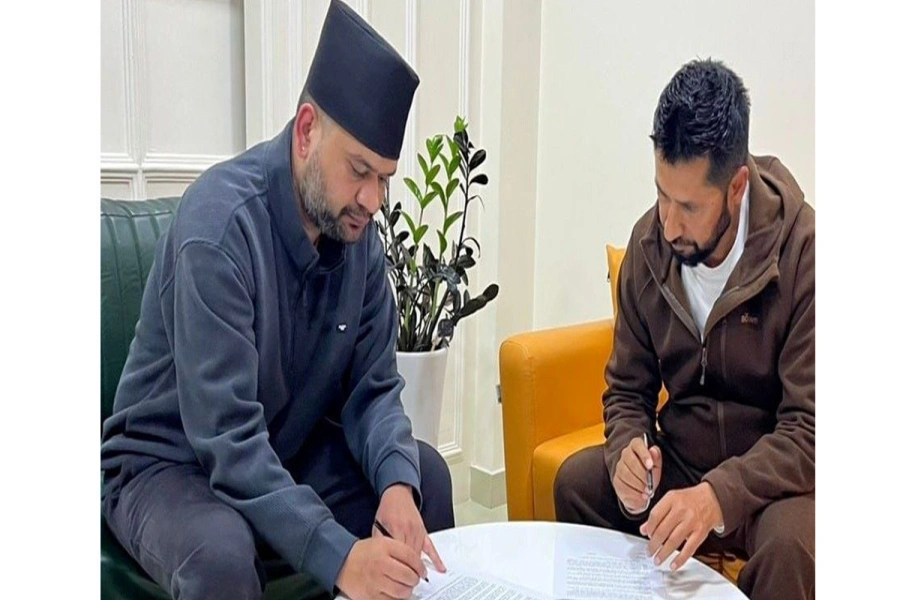
The party's statute mandates that all party members vote to choose the parliamentary leader. In practice, this provision may not be followed this time. The RSP had already signed a written agreement before the election naming Balen Shah as its prime ministerial candidate. For that reason, the party may not conduct a full internal vote as described in its statute.
The RSP statute contains detailed provisions regarding the selection of the parliamentary leader. Clause 66 of the statute outlines the process. It states that before the federal election, interested candidates among those nominated by the party for both proportional and direct seats may contest an internal election to choose the parliamentary leader.
All ordinary party members have the right to vote in that election. The candidate who secures a majority of valid votes becomes the parliamentary leader. If no candidate obtains more than half of the valid votes, a second round takes place between the top two candidates.
The statute also states that the central committee sets the date of this internal election, and the party’s central election commission manages the process. Once elected, the parliamentary leader cannot be removed unless a majority of party members decide to recall the leader under the statute. The central committee may remove the leader only if the person no longer meets the qualifications required by party rules. In the coming days, the RSP must decide how closely it will follow these provisions while choosing its parliamentary leader and preparing to form the next government.

















-1200x560-1779450784.webp)

