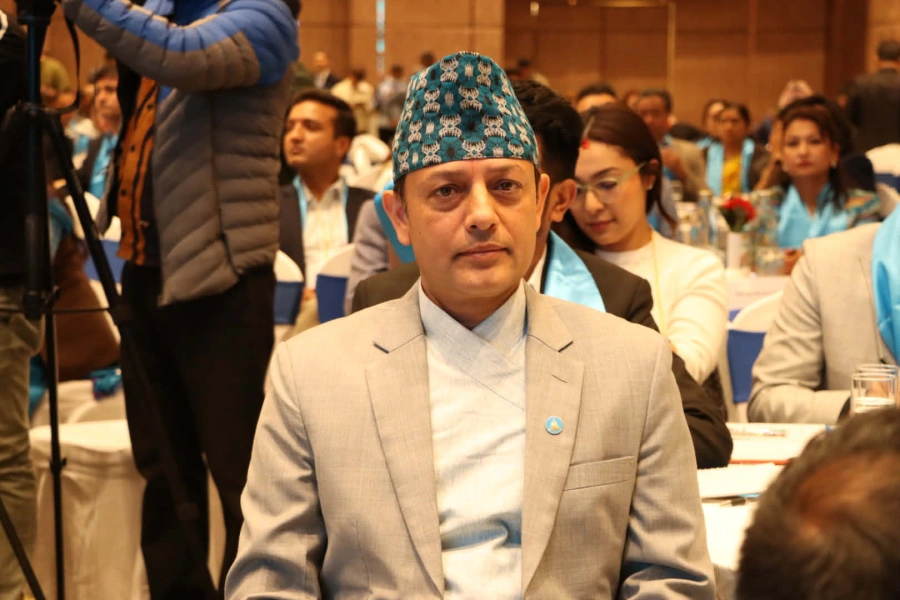
KATHMANDU, June 4: A high-level commission formed to investigate and map the wealth of key political figures and senior public officials who held office between 2006 and 2025—one of the flagship priorities of the Balendra Shah-led government—will not probe the assets of the Chief Justice and Supreme Court justices, sitting office-bearers of constitutional bodies, the Nepali Army, or first-time Members of Parliament (MPs) and ministers.
Commission member Ganesh KC clarified that under the commission’s Terms of Reference (ToR), the authority to investigate the assets of first-time MPs and ministers, the judiciary, the Nepali Army, and officials of constitutional bodies falls entirely outside its jurisdiction.
He said that the current Prime Minister and ministers have already submitted their property details, which have also been made public, and that scrutiny of sitting officials in the courts, army, and constitutional bodies simply does not come within the commission’s scope of work.
However, KC noted that former officials of constitutional bodies and Nepal Police personnel will come under asset scrutiny. He also made it clear that the commission has no authority to investigate the wealth of the President, vice president, former presidents, former vice presidents, or the former King.
Despite these exclusions, the mandate published in the Nepal Gazette on April 15, 2026, governing the formation and functioning of the Asset Investigation Commission provides a procedural workaround. It states that if complaints are received against individuals outside the commission’s jurisdiction, such cases will be forwarded to the relevant authorities for investigation.
JC recommends 35 judges for district courts and six judges for...

Section 17(b) of the Gazette explicitly states that complaints involving sitting judges, members of the Nepali Army, or other officials and employees not falling under the commission’s jurisdiction shall be forwarded in writing to the concerned authority for investigation. KC echoed this provision, saying that any complaints filed against exempted officials would be routed to the appropriate agencies.
Similarly, a public notice issued by the commission on May 14 excluded the sitting Prime Minister, ministers, first-time MPs, judges, and army officials from its immediate list of those subject to direct scrutiny. However, in a separate notice issued the same day, the commission opened a broad window for whistleblowers, allowing citizens to file complaints against any public office-holder, regardless of whether they are on the investigation list.
The notice states that if anyone has information, knowledge, or evidence regarding illegally or unusually accumulated assets held domestically or abroad in their own name or in the names of family members, relatives, associates, or unrelated proxies, such complaints may be submitted. Complaints can be filed in person during office hours or sent via post or email, along with available evidence and contact details of the accused, while disclosing the complainant’s identity. The notice also assures that the identities of informants will be kept strictly confidential.
According to sources within the commission, the public call for complaints has triggered a sharp rise in submissions targeting the assets of various public figures. A staff member said the number of daily complaints has been steadily increasing since the notice was issued.
Meanwhile, former chief justices and judges have decided to boycott the asset disclosure request. Following the commission’s public notice, former and serving Supreme Court judges held an internal meeting on May 31, where they collectively decided not to submit their property details to the commission.
The commission—tasked with investigating and mapping the wealth of key political figures and senior officials who held office between 2006 and 2025—has already begun its work of examining public wealth. The government has prepared the operational procedures for the commission and published them on its official website, clearly outlining the categories of individuals whose assets will be investigated.
According to the guidelines, the commission will investigate former prime ministers, deputy prime ministers, ministers, state ministers, and assistant ministers of both the former His Majesty’s Government (HMG) and the Government of Nepal. It will also scrutinize former Members of the Constituent Assembly, former Members of Parliament, current Provincial Assembly members and office-bearers, heads and officials of constitutional bodies, and former judges.
Furthermore, the probe will extend to former and current officials of the rank of Joint Secretary (Gazetted First Class) and above in the Nepali Army, Nepal Police, Armed Police Force (APF), and National Investigation Department (NID). It will also cover joint secretaries across the Civil Service, Parliament Service, Health Service, and National Human Rights Commission (NHRC) Service.
The investigation will further include officials of former District Development Committees and current District Coordination Committees, as well as mayors, deputy mayors, chairpersons, and vice-chairpersons of local governments. Heads and employees of Nepali embassies and diplomatic missions holding Gazetted First Class rank or above will also fall under scrutiny.
In addition, current or former office heads holding Gazetted Second Class rank or equivalent in the Civil Service, Parliament Service, Health Service, NHRC, Nepal Police, APF, and NID will be investigated. The probe also covers the Governor of Nepal Rastra Bank; board members; deputy governors, executive directors, and Gazetted First Class or higher-ranking employees, along with officials of state-owned banks and financial institutions.
The scope further includes chairpersons, board members, executive directors, and senior officials of government-owned or partially owned public enterprises, boards, committees, authorities, and state-funded universities and academies.
On April 15, 2026, the Cabinet decided to form a four-member commission under the chairmanship of former Supreme Court judge Rajendra Kumar Bhandari. Other members include former judges Chandi Raj Dhakal and Purushottam Parajuli, former Deputy Inspector General of Police Ganesh KC, and Chartered Accountant Prakash Lamsal.
The decision to form the commission within 15 days was taken on March 27, shortly after Balendra Shah assumed office as Prime Minister. The move was also included as Clause 43 of the government’s recently unveiled 100-point governance reform agenda.