ANTALYA, Nov 15: Nepal has urged developed countries to urgently deliver adequate, predictable and accessible loss and damage financing, insisting that the money must be provided as grants rather than loans to countries bearing the brunt of climate change.
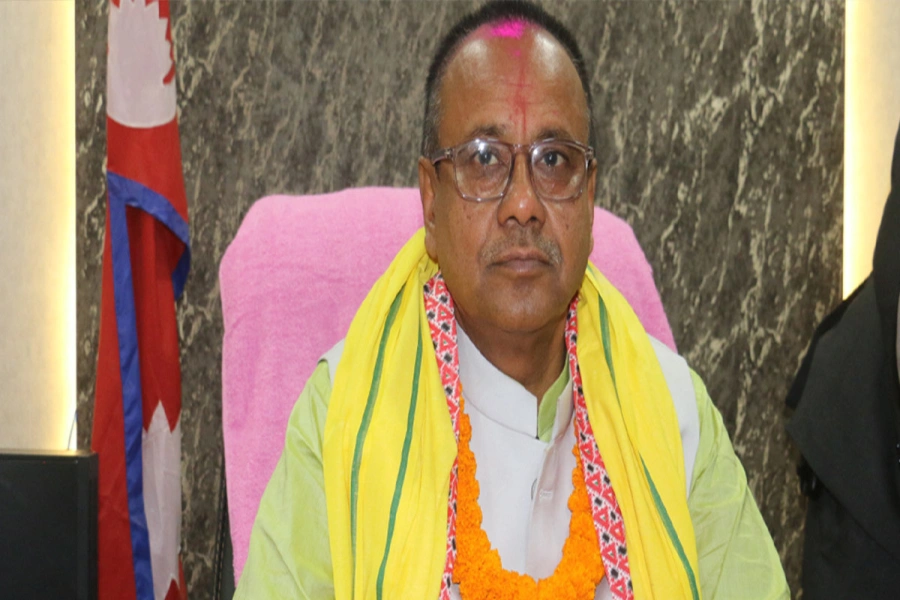
Addressing a high-level event organized by the Fund for Responding to Loss and Damage (FRLD) on Saturday at the COP31 venue in Antalya, Minister Gita Chaudhary said climate-vulnerable countries cannot afford to wait for lengthy funding procedures while communities continue to suffer from climate-induced disasters.
Speaking at the event titled “FRLD: Fostering Availability, Accessibility and Affordability of Loss and Damage Finance,” Chaudhary highlighted Nepal's experience with the devastating Bhote Koshi flash floods of August 26, 2026, as an example of the urgent need for effective international support.
“I have not come to speak about numbers. I have come to speak for people who can no longer speak for themselves,” she said, recalling the devastation caused by the floods.
According to the minister, around 1,500 people from 34 countries lost their lives, while more than 5,000 remain missing. Entire communities, livelihoods and settlements were swept away in less than seven minutes.
She said Nepal lost economic assets equivalent to nearly 10 percent of its gross domestic product (GDP) within hours of the disaster, while recovery and resilient reconstruction could require resources equivalent to 20 percent of the country's GDP.
“Nepal produces less than 0.1 percent of global emissions, yet we are paying one of the heaviest prices,” she said.
SHIFT for Our Planet: Youths urge authorities to make climate j...

Describing the human consequences of climate change, Chaudhary said loss and damage was not merely a policy debate for Nepal but a reality involving lost lives, homes, livelihoods, futures and cultural heritage.
She also pointed to wider consequences beyond physical disasters, including dengue outbreaks in the lowlands, growing pressure on women's health and dignity, and the erosion of indigenous heritage.
“These add up to losses no balance sheet can capture,” she said.
The minister acknowledged the FRLD's response to Nepal's disaster, expressing gratitude to the Fund's co-chairs, Board and Secretariat for convening its first-ever extraordinary meeting and provisionally setting aside USD 21.6 million for Nepal.
However, she described the amount as “utterly inadequate” compared to the scale of destruction and recovery needs.
“That decision told the world that solidarity is not just a word. It can be a decision,” she said.
Chaudhary said Nepal would soon submit a nationally owned and transparent proposal focusing on the needs of affected communities, expressing the country's commitment to honor the trust placed in it by the Fund.
She outlined three major challenges facing loss and damage financing: delays in accessing funds, inadequate capitalization and the risk that financing will be provided through loans rather than grants.
“Funding that is delayed is not access. Disasters do not wait for paperwork, and neither can survivors,” she said.
On the availability of resources, she argued that pledges must translate into actual financial contributions.
“A pledge is a promise. A payment is proof,” she said, urging contributing countries to fulfill their outstanding commitments and ensure that the Fund's first replenishment reflects the scale of the climate crisis.
Emphasizing the need for grant-based financing, she said vulnerable countries should not be burdened with additional debt for damages caused by climate change, to which they have contributed very little.
“We will not accept a world where the victims of climate change are made to borrow funds for coffins,” she said.
The minister called on developed country parties to honor their commitments and establish predictable, adequate, science-based and needs-based financing mechanisms to address the growing gap between climate-induced losses and the resources available to affected countries.
Referring to the planned FRLD Board meeting in Kathmandu in March 2027, Minister Chaudhary invited Board members to witness the impacts of climate disasters on affected communities.
“Come and see what your decisions mean on the ground,” she told the participants.
Concluding her remarks, she called for Nepal's tragedy to become a turning point in making loss and damage finance genuinely available, accessible, affordable and timely.
“History will not judge us by what we pledged in Antalya. It will judge us by what we delivered,” she said.
The event brought together ministers, FRLD Board members and other stakeholders to discuss how to make loss and damage financing more accessible and responsive to the needs of climate-vulnerable developing countries.