POKHARA, Oct 28: Tangled overhead wires and deteriorating utility poles that once marred Pokhara’s streetscape and posed safety risks are gradually disappearing as the Nepal Electricity Authority (NEA) moves to install underground power lines across key urban areas.
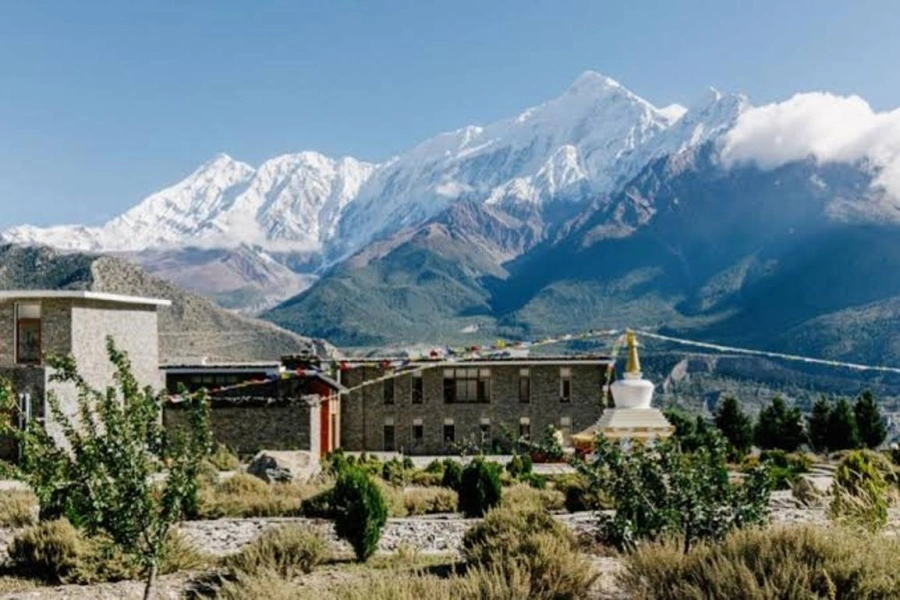
The removal of cluttered poles and dangling wires has opened up roads and improved the city’s appearance, allowing clearer views of the surrounding mountains. Alongside electricity cables, telephone, cable television and internet lines are also being shifted underground.
The NEA began underground cabling in Pokhara four years ago under the Pokhara-Bharatpur Distribution System Strengthening Project. The project aims to install underground electrical cables across 223 kilometres in Pokhara.
Project chief engineer Anand Subedi said 165.7 kilometres of cables had been laid, with electricity already flowing through 55.2 kilometres. Physical progress in Pokhara has reached 82 percent, and the project aims to complete the work by mid-April 2027.
“The project has achieved 82 percent physical progress in Pokhara, and we aim to complete the work by next Baisakh,” Subedi said, adding that around 6,000 households would receive electricity through the underground system.
More than 400 households along the Prithvi Highway, from Chauthe in Pokhara-14 through Kudhar, Amarsingh Chowk and Buddha Chowk to Seti Bridge, are already receiving electricity through the system, he said.
NEA’s plan to lay underground electricity cables on main roads...

Cable installation has also been completed along the main road connecting Seti Bridge to Prithvi Chowk, Sabhagriha Chowk, Sirjana Chowk and Zero Kilometre before reaching Lakeside. Underground cables have been laid on Lakeside’s inner roads, with only the connection of electricity remaining.
Work is continuing on sections of roads linking Sabhagriha Chowk through New Road to Chipledhunga, as well as Sirjana Chowk through Nagdhunga towards Tal Barahi Temple in Lakeside.
Subedi said electricity could not yet be supplied through cables laid towards Prithvi Chowk because Seti Bridge was still under construction. With the bridge nearing completion, he said, the remaining areas would soon receive underground electricity connections.
The project is also installing optical fibre for telephone, cable television and internet services alongside power lines. Subedi said the overhead wires previously installed in the project areas had been removed.
The first phase prioritised Pokhara’s main urban areas and locations frequented by tourists. The project office estimates that underground cabling and distribution system upgrades in Pokhara will cost Rs 1.7 billion.
The cables are being installed using horizontal directional drilling, a technique that allows underground construction with limited surface excavation.
India’s Tata Projects received the contract in January 2022, with a two-year completion target. However, cable installation in Pokhara began only 15 months later because of delays in engineering design and equipment procurement. Subedi said slow progress by the contractor had also affected implementation.
The removal of ageing poles and tangled wires is expected to reduce accident risks as well as improve the city’s appearance. Sujit Kumar Devkota, chief of the District Traffic Police Office in Kaski, said poorly managed wires and poles had contributed to fatal accidents involving vehicles striking poles and people being electrocuted.
“Removing disorganised wires and poles reduces the risk of electrical accidents as well as road accidents,” he said, adding that extending underground cabling throughout Pokhara would be beneficial.
The NEA’s Pokhara Distribution Centre said replacing old poles and wires across the entire valley would require substantial investment. Much of the existing electricity network dates back four decades and needs replacement.
Under the same project, 156.33 kilometres of underground electrical cables have been installed in Bharatpur, where work is 95 percent complete. Overall physical progress across Pokhara and Bharatpur has reached 88 percent, according to Subedi.
Although underground systems are more expensive, they offer greater capacity and reliability to meet rising electricity demand. Subedi estimated that burying power lines throughout Pokhara Valley would require more than Rs 5 billion.
“This is an expensive project, and the government cannot make such a large investment all at once. The work will be expanded to other parts of Pokhara based on its impact and usefulness,” he said.
The NEA is implementing the project in Pokhara and Bharatpur with concessional loan assistance from the Asian Development Bank.