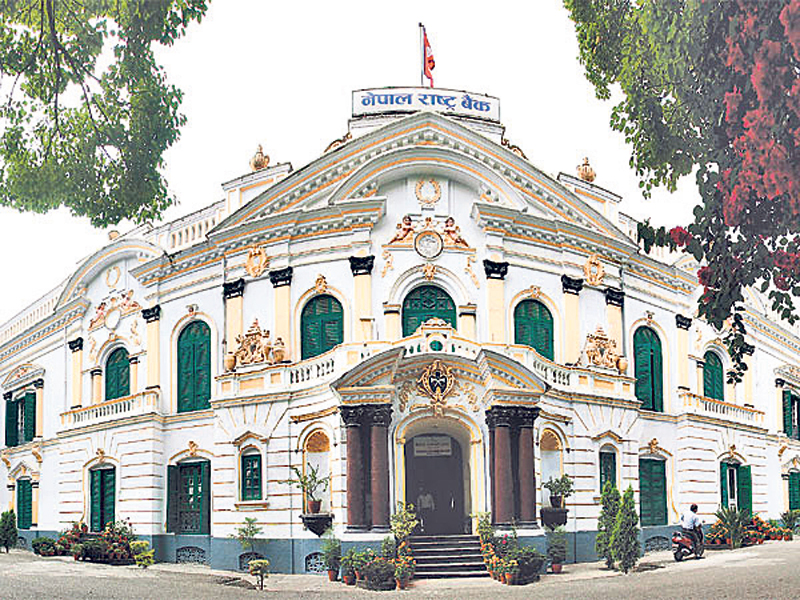
KATHMANDU, Aug 5: Nepal Rastra Bank (NRB) mopped up more than Rs 1.7 trillion from Nepal’s banking system by using various monetary instruments in the first 20 days of the current Fiscal Year amid banks having excessive loanable funds with them.
Of the total amount, Rs 306.1 billion was absorbed through the regular deposit collection instrument alone, while banks and financial institutions (BFIs) deposited an additional Rs 1.4 trillion with the NRB through the Standing Deposit Facility (SDF).
According to the Monetary Management Department of the NRB, the central bank received applications worth Rs 340.4 billion from the BFIs under six regular deposit collection auctions from the start of the current FYconducted until Wednesday. Although the NRB invited bidding proposals for Rs 320 billion, it finally accepted only Rs 306.1 billion.
NRB absorbs Rs 14.1 trillion of BFIs excess liquidity

During this period, the cut-off interest rate for deposit collection remained between 2.69 and 2.70 percent, while the weighted average interest rate remained between 2.72 and 2.73 percent. The highest weighted average interest rate of 2.73 percent was recorded in the 61-day deposit collection on July-end.
Along with regular deposit collection, the BFIs are also keeping their additional funds under the SDF scheme on a daily basis. In the review period, a total of Rs 1.406 trillion was deposited in the central bank via 460 transactions.
Since the SDF is a short-term monetary instrument, the BFIs have been using this facility for earnings even for a short period, indicating the serious excessive liquidity situation existing in the banking system, according to bankers.
According to the NRB record, it has been holding Rs 1.3 trillion out of the liquidity absorbed through various instruments. This includes Rs 819.55 billion gathered through deposit collection instruments, Rs 400 billion through NRB bonds, and Rs 80.45 billion through SDF.
For the past few years, banks have been unable to expand their loans by a notable amount due to the ongoing economic slowdown. Due to this reason, the average interest rate on personal fixed deposits has dropped to as low as percent, while credit-deposit ratio has come down to 71.22 percent, against the regulatory ceiling of 90 percent.