There are moments when the true character of a relationship is revealed not across negotiating tables or through carefully drafted diplomatic statements, but in the hours after tragedy strikes. For Nepal, grappling with the devastating consequences of the latest floods, this is one such moment.
Lives have been lost, families have been displaced, and communities have been left confronting the destruction of homes, roads and livelihoods. At such a time, politics must recede into the background. The immediate concern is for those grieving, those still searching for loved ones, and those wondering how they will rebuild what the waters have taken away.
It is also in moments such as these that Nepal discovers once again that it does not stand alone.
India’s response has been swift. Prime Minister Narendra Modi personally conveyed his condolences and solidarity to Prime Minister Balen Shah and offered all possible assistance. This was followed by humanitarian aid, including essential relief materials and medicines, reaching Nepal as rescue and rehabilitation efforts gathered pace.
Yet the significance of these gestures lies beyond the quantity of supplies delivered or the speed with which an aircraft can reach Kathmandu. They reflect something deeper about the relationship between Nepal and India.
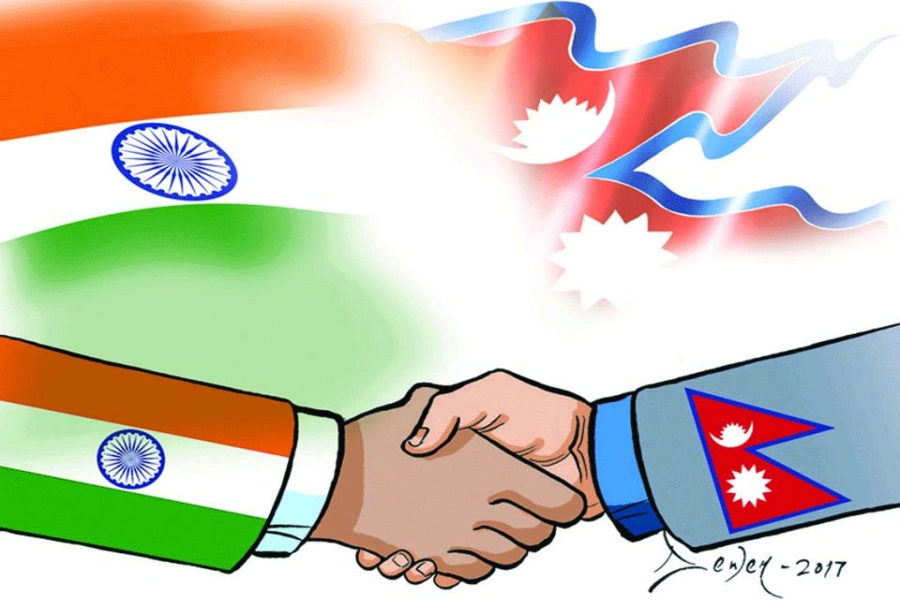
The two countries are neighbours, but the word “neighbour” has never adequately described their relationship.
Across the open border are families connected by marriage and kinship. Languages, faiths, festivals, food and traditions flow across geographical boundaries with an ease that predates the modern states themselves. Nepalis live, study and work in India, just as Indians have long-standing personal and commercial ties with Nepal. Millions of individual relationships form an invisible bridge between the two countries every day.
Governments may occasionally disagree. Political debates may become heated, and misunderstandings inevitably arise between two sovereign nations with such an intimate relationship. Yet disasters have repeatedly demonstrated that beneath these differences lies something far more enduring.
When Nepal suffered the catastrophic earthquake of 2015, India launched one of its largest overseas disaster-relief operations within hours. Indian rescue teams, medical personnel, aircraft and relief supplies arrived as Nepal confronted one of the darkest moments in its recent history. Nepali and Indian personnel worked side by side, searching through rubble and reaching isolated communities.
Digitized era of friendship

Nepal has reciprocated this spirit in India’s moments of difficulty. During the COVID-19 pandemic and other crises, the relationship repeatedly demonstrated that solidarity between the two societies does not flow in only one direction.
This is how relationships between close neighbours should work.
The Himalayas do not recognise political boundaries when rivers overflow, glaciers burst or mountains collapse. Nepal’s geography makes it extraordinarily vulnerable to floods, landslides, earthquakes and increasingly unpredictable climate events. India faces many of the same dangers across its Himalayan states and the vast river systems that connect the two countries.
Disaster preparedness, therefore, cannot be viewed solely through a national lens. Nepal and India have every reason to deepen cooperation in hydrology, meteorological information, early-warning systems, satellite monitoring, disaster-response training and emergency logistics.
A warning delivered a few hours earlier can save hundreds of lives. Better information about rainfall and river flows can allow downstream communities to evacuate. Jointly developed emergency protocols can ensure that rescue personnel and relief supplies cross borders without losing precious time to bureaucracy.
This tragedy should therefore strengthen the case for building a permanent Nepal-India humanitarian and disaster-response framework capable of responding immediately whenever either country faces a major emergency.
But institutions alone cannot explain the relationship.
There is another dimension that matters enormously in South Asia: emotion.
For ordinary Nepalis watching homes disappear beneath floodwaters, international relations can seem distant and abstract. What matters in those moments is knowing that help is coming. When a neighbouring country immediately offers assistance, sends medicines and relief supplies, and publicly tells the people of Nepal that they are not alone, the message carries significance beyond diplomacy.
It says simply: We are here.
That should also guide how India approaches Nepal. Assistance should never become an exercise in self-congratulation. Nepal is a proud and sovereign nation. Humanitarian support is most meaningful when it is offered quietly, respectfully and according to what affected communities actually need.
Friendship is strongest when assistance comes without any expectation of applause.
The same principle should shape public conversations in both countries. Nepal-India relations are too important to be reduced to the controversy of the day. Social media can amplify disagreements until they appear larger than the enormous reservoir of everyday cooperation that exists between the two societies.
Disasters remind us of that larger reality.
Governments change. Political disagreements emerge and eventually subside. Headlines that dominate public debate today are forgotten tomorrow. Geography, however, does not change. Neither do the centuries of human connections linking the peoples living on both sides of the border.
As Nepal mourns those lost in these floods and begins the difficult task of recovery, India’s assistance should be understood in its most human context.
A brother does not wait to be asked repeatedly when his brother’s house is in danger. A neighbour does not debate old disagreements while the family next door is struggling.
They come.
Today, Nepal needs compassion, rescue, relief and, eventually, reconstruction. India has begun to stand beside it, as friends and neighbours should.
And perhaps that is the most enduring truth about the Nepal-India relationship. It does not need to be rediscovered at diplomatic summits. It reveals itself most clearly in difficult moments, when tragedy strips away rhetoric and leaves behind the simplest measure of friendship:
When we needed each other, were we there?
For Nepal and India, history has repeatedly provided the answer.
The author is Editor at The Daily Milap, India