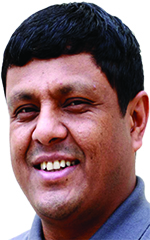
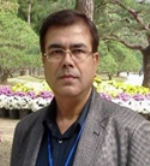
KATHMANDU, Nov 21: The Central Investigation Bureau (CIB) of Nepal Police on Wednesday arrested six people, including two former ministers. An arrest warrant has also been issued against former Chief Secretary Eknarayan Aryal. They are accused of helping transfer money collected from Nepali workers to Malaysia in violation of an agreement between the two countries.
The CIB arrested former Labour, Employment and Social Security Ministers Rameshwar Rai Yadav and Sher Bahadur Kunwar, along with former ministry secretary Binod KC, after finding that workers had been charged more than the government approved for mandatory health examinations, with the excess money sent to Malaysia.
The investigation found that the collection began in 2019. Preliminary findings indicate that more than Rs 2.17 billion was collected from workers.
The CIB launched its investigation in late October, initially arresting Kailash Khadka, a Nepali agent involved in arranging medical examinations for workers going to Malaysia. The investigation subsequently expanded to former ministers and senior government officials. Investigators found that the money was collected in violation of the bilateral agreement and transferred to Malaysia after being converted into US dollars.
Former minister Kunwar, ministry officials and the Malaysian Embassy in Kathmandu are suspected of playing roles in facilitating the foreign currency transfers.
How the collection scheme began
In May 2018, then Labour Minister Gokarna Bista ordered raids on several medical centres following complaints about health examinations for Nepali workers heading to Malaysia. Khadka was named as a defendant in a case filed by the Kathmandu District Police Range. After remaining at large, he appeared before the court, which acquitted him, citing the absence of a complainant.
The government subsequently decided to negotiate a new agreement with Malaysia on labour migration.
Death toll from landslide and flood reach 217 with 28 others st...

On November 12, 2018, Bista and Malaysia's Human Resources Minister signed a bilateral agreement aimed at making recruitment and migration easier for Nepali workers. A joint team from both countries was formed to implement it.
The team held its first meeting in Kathmandu in September 2019, followed by a second meeting in Kuala Lumpur. It outlined the responsibilities of both governments, workers and employers.
Under the agreement, workers were required to pay only the fees prescribed by the Nepali government and passport charges. All other costs were to be borne by employers.
However, employers proposed conducting medical examinations in Nepal and reimbursing the costs through workers' first month's salaries after receiving the bills. Both governments agreed to the arrangement. Any change in fees also required mutual approval.
Despite these provisions, workers were charged additional fees.
Malaysia had authorised Bestinet, a company facilitating visa processing and health examinations for foreign workers, to operate in Nepal. Bestinet approved 39 medical centres in Nepal to examine workers travelling to Malaysia.
In January 2020, Khadka established a company called Microtech in Teku, Kathmandu, supposedly to supply and maintain medical equipment for the 39 centres. Investigators say the company instead became the channel for collecting unauthorised payments.
According to CIB chief AIG Uma Prasad Chaturvedi, medical centres began charging each worker an additional 100 Malaysian ringgit, equivalent to around Rs 3,200 at the time, on top of their examination fees.
The additional charge violated the bilateral agreement. Microtech had also never received approval from Nepal's Labour Ministry to collect such payments. Investigators say the Malaysian Embassy nevertheless sent a letter supporting the arrangement, raising questions about the involvement of its officials.
From February 2020, 90 percent of the additional 100 ringgit collected from each worker was supposed to be transferred to Bestinet.
Khadka applied to the Nepal Rastra Bank for permission to convert the collected money into US dollars. The Malaysian Embassy also wrote to the central bank, identifying Microtech as a branch of Bestinet and requesting permission to transfer the funds to the Malaysian company's account. The embassy sought approval for transfers of up to $1 million at a time.
The central bank forwarded the request to the Labour Ministry for approval.
Investigators allege that ministry officials, including the ministers and secretary, facilitated the transfers without questioning why workers were being charged 100 ringgit when the bilateral agreement contained no such provision.
Between February 2020 and August 2024, Microtech transferred money to Bestinet in Malaysia 17 times. Each foreign currency transfer required Labour Ministry approval. However, the ministry issued written approval on only four occasions.
An investigating officer said officials never asked how the money had been collected or why it was being transferred.
Medical centres authorised to examine Nepali workers sent Rs 1.69 billion directly to Microtech's bank account. Including cash transactions outside the banking system, investigators estimate that the total collection exceeded Rs 2.17 billion.
The largest transfers took place during Yadav's tenure as labour minister, which lasted around 10 months. A substantial amount was also transferred during Kunwar's tenure.
AIG Chaturvedi said the two former ministers and the secretary were arrested over their suspected role in approving foreign currency transactions. Investigators are yet to establish whether they received any money in return.
“We have arrested them and will gradually establish how much money entered their accounts and why transfers were approved without examining the bilateral agreement. We will also investigate their assets,” Chaturvedi said.
Ten people are now in custody, while former Chief Secretary Aryal remains at large despite the arrest warrant.
The CIB said it would complete its investigation and forward the case to the Commission for the Investigation of Abuse of Authority (CIAA) for a separate probe into possible corruption charges.